ENVIRONMENTALPRODUCT DECLARATIONIN ACCORDANCE WITH ISO 14025 AND EN 15804:2012+A2:2019/AC:2021SmartEPD-2024-014-0089-01Stongard MRDate of Issue:Feb 28, 2024Expiration:Feb 28, 2029Last updated:May 31, 2024
Stongard MRStonhardGeneral Information3Reference Standards3Verification Information3Limitations, Liability, and Ownership4Organization Information4Product Information4Plants5Product Specifications5Material Composition5Software and LCI Data Sources7EPD Data Specificity7Renewable Electricity7System Boundary8Product Flow Diagram9Life Cycle Module Descriptions9LCA Discussion10Results11Environmental Impact Assessment11Resource Use Indicators12Waste and output Flow Indicators12Carbon Emissions and Removals13Scenarios14Installation in to the building/construction site (A5)14Interpretation14Further Information15References15Page 2 / 15
Stongard MRStonhardGeneral Information Stonhard 1000 E. Park Ave., Maple Shade, NJ 08052800.257.7953info@stonhard.comstonhard.comProduct Name:Stongard MRDeclared Unit:1 kg of applied productDeclaration Number:SmartEPD-2024-014-0089-01Date of Issue:February 28, 2024Expiration:February 28, 2029Last updated:May 31, 2024EPD Scope:Cradle to gate with other optionsA1 - A3, A5 Market(s) of Applicability:Europe, North AmericaReference StandardsStandard(s):ISO 14025 and EN 15804:2012+A2:2019/AC:2021Core PCR:EPD International AB EPD International PCR for Construction Products v1.3.2 v.1.3.2, ISO 21930:2017Date of issue: December 08, 2023Sub-category PCR:EPD International AB PCR 2019:14-c-PCR-017 Technical-Chemical Products for Construction Sector) (adopted from EPD Norway 2022-07-08) v.3.0Date of issue: October 17, 2023Valid until: July 01, 2024Sub-category PCR review panel:Contact Smart EPD for more information.General Program Instructions:Smart EPD General Program Instructions v.1.0, November 2022Verification InformationLCA Author/Creator:Amy TorriParqamy@parqhq.comEPD Program Operator:Smart EPDinfo@smartepd.comwww.smartepd.com585 Grove St., Ste. 145 PMB 966, Herndon, VA 20170, USAPage 3 / 15
Stongard MRStonhardVerification: Independent critical review of the LCA and data, according to ISO 14044 and ISO 14071 : External Gaspard PhilisLCA.nogaspard@lca.no Independent external verification of EPD, according to ISO 14025 and reference PCR(s) : External Gaspard PhilisLCA.nogaspard@lca.noLimitations, Liability, and Ownership EPDs within the same product category but registered in different EPD programmes, or not compliant with EN 15804, may not be comparable. For two EPDs to be comparable, they must be based on the same PCR (including the same version number) or be based on fully-aligned PCRs or versions of PCRs; cover products with identical functions, technical performances and use (e.g. identical declared/functional units); have equivalent system boundaries and descriptions of data; apply equivalent data quality requirements, methods of data collection, and allocation methods; apply identical cut-off rules and impact assessment methods (including the same version of characterisation factors); have equivalent content declarations; and be valid at the time of comparison. For further information about comparability, see EN 15804 and ISO 14025.The EPD owner has sole ownership, liability, and responsibility for the EPD. Organization Information Stonhard is the unprecedented leader in manufacturing and installing high performance floors. Our seamless, long lasting, easy to clean systems are engineered for both industrial and commercial markets. We also bring the same performance to our wall and lining systems. Joining form and function, our floors are the dependable go-to choice for tough manufacturing environments, while still honoring innovative design for commercial environments. Epoxy, urethane and fast-track methyl methacrylate resin-based systems deliver a broad range of options for every market and application. Stonhard manufactures and installs products throughout the world with headquarters in Maple Shade, New Jersey. Stonhard is an ISO-9001 registered company. Further information can be found at:https://www.stonhard.com/about-us/who-we-are/Product Description Stongard MR is a fluid applied flooring system which falls under the MasterFormat classification 09 67 00.00 Finishes: Fluid-Applied Flooring. It consists of 3-layers: a primer (Primer 150), a polyurethane elastomeric membrane (Stonproof ME7) and a top coat (Stonkote HT4). Individual component descriptions: Primer 150 is a two-component, epoxy based primer. It is applied to a properly prepared substrate prior to the application of the appropriate Stonhard overlayment. The use of Primer 150 ensures a secure bond between the substrate and the overlayment, as well as provide protection from moisture that is present in green concrete. Stonproof ME7 is a two-component polyurethane elastomeric membrane used for positive-side waterproofing applications. Stonkote HT4 is a two-component, 100% solids, epoxy coating. It is specifically formulated to provide outstanding protection from a wide range of chemicals while increasing abrasion resistance and cleanability. Stonkote HT4 is easily applied and hardens to an attractive gloss finish. Further information can be found at:https://www.stonhard.com/products/stongard/Product InformationDeclared Unit:1 kg of applied productPage 4 / 15
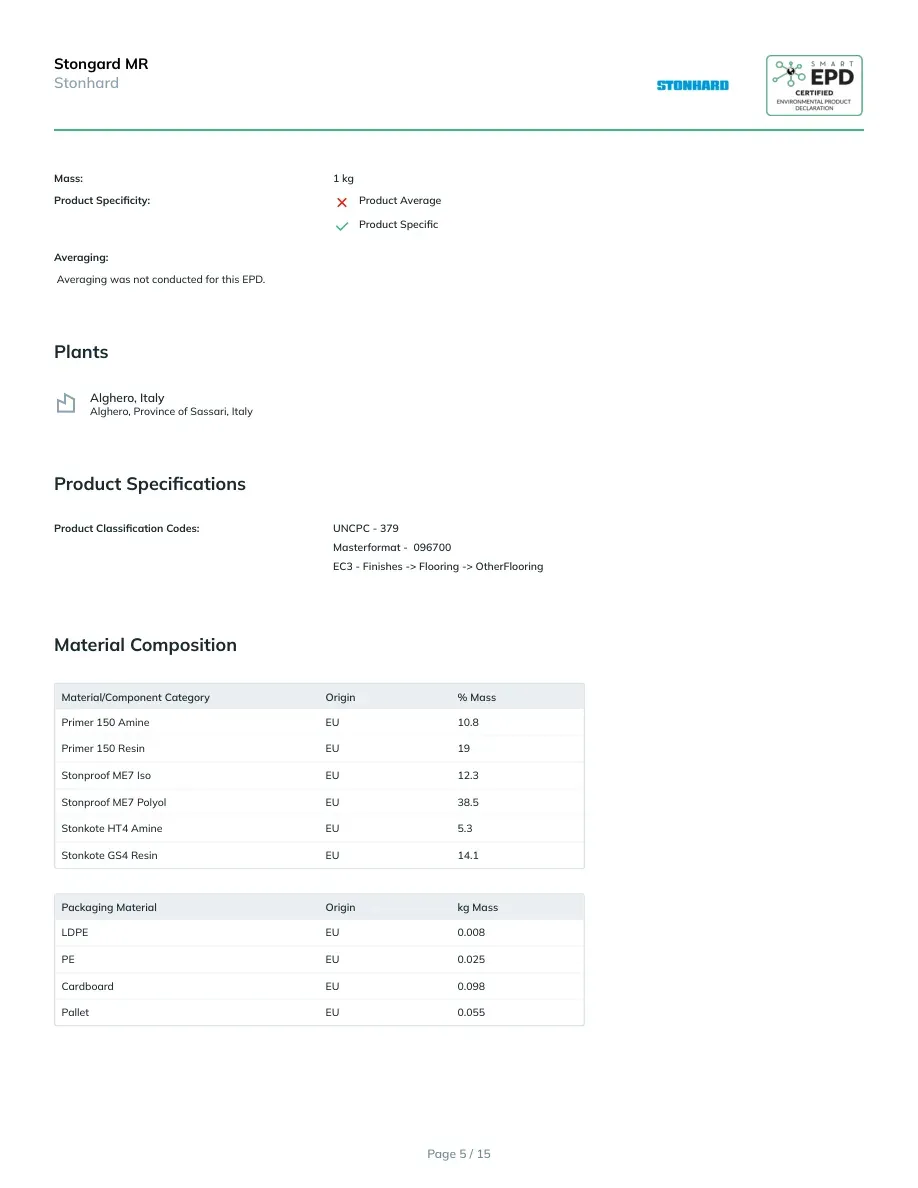
Stongard MRStonhardMass:1 kgProduct Specificity:Product AverageProduct SpecificAveraging: Averaging was not conducted for this EPD. PlantsAlghero, ItalyAlghero, Province of Sassari, ItalyProduct SpecificationsProduct Classification Codes:UNCPC - 379Masterformat - 096700EC3 - Finishes -> Flooring -> OtherFlooringMaterial CompositionMaterial/Component CategoryOrigin% MassPrimer 150 AmineEU10.8Primer 150 ResinEU19Stonproof ME7 IsoEU12.3Stonproof ME7 PolyolEU38.5Stonkote HT4 AmineEU5.3Stonkote GS4 ResinEU14.1Packaging MaterialOriginkg MassLDPEEU0.008PEEU0.025CardboardEU0.098PalletEU0.055Page 5 / 15
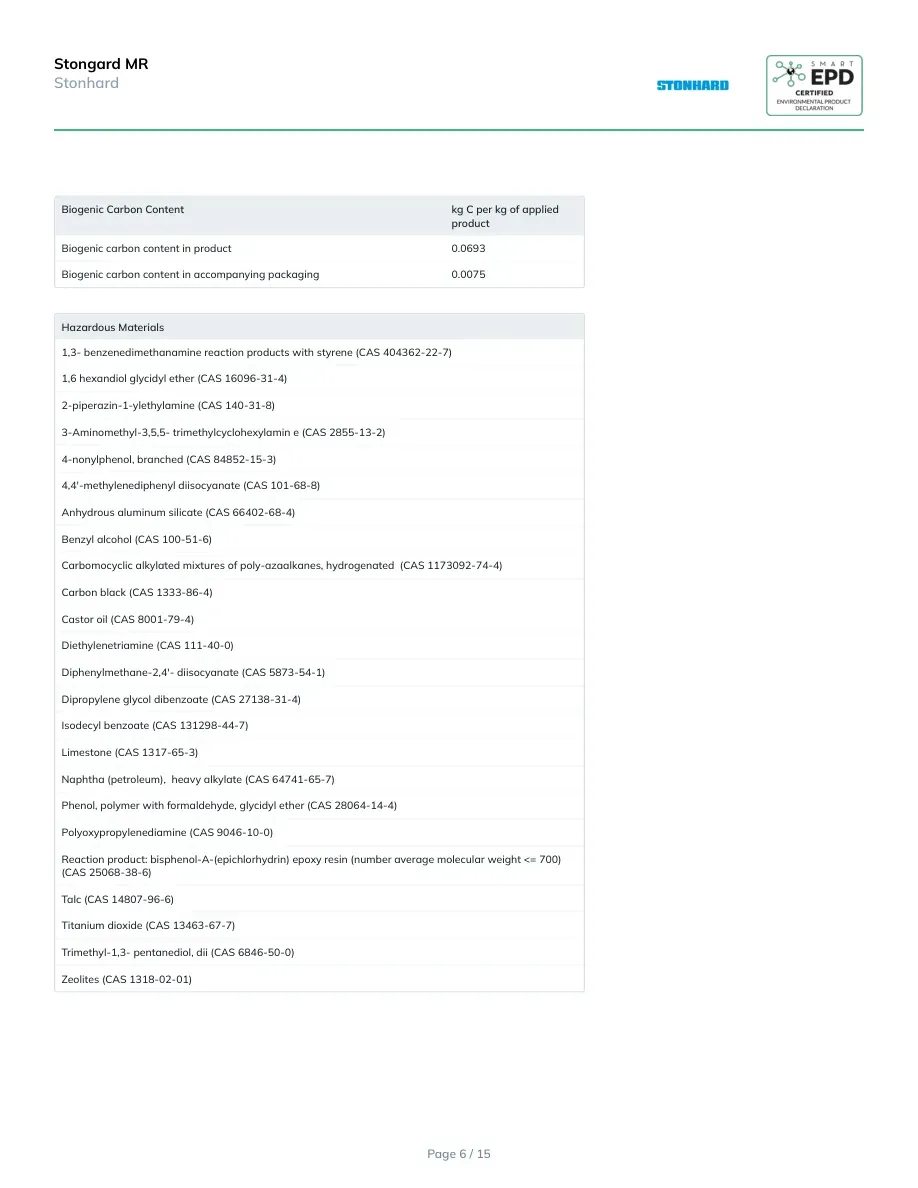
Stongard MRStonhardBiogenic Carbon Contentkg C per kg of applied productBiogenic carbon content in product0.0693Biogenic carbon content in accompanying packaging0.0075Hazardous Materials1,3- benzenedimethanamine reaction products with styrene (CAS 404362-22-7)1,6 hexandiol glycidyl ether (CAS 16096-31-4)2-piperazin-1-ylethylamine (CAS 140-31-8)3-Aminomethyl-3,5,5- trimethylcyclohexylamin e (CAS 2855-13-2)4-nonylphenol, branched (CAS 84852-15-3)4,4'-methylenediphenyl diisocyanate (CAS 101-68-8)Anhydrous aluminum silicate (CAS 66402-68-4)Benzyl alcohol (CAS 100-51-6)Carbomocyclic alkylated mixtures of poly-azaalkanes, hydrogenated (CAS 1173092-74-4)Carbon black (CAS 1333-86-4)Castor oil (CAS 8001-79-4)Diethylenetriamine (CAS 111-40-0)Diphenylmethane-2,4'- diisocyanate (CAS 5873-54-1)Dipropylene glycol dibenzoate (CAS 27138-31-4)Isodecyl benzoate (CAS 131298-44-7)Limestone (CAS 1317-65-3)Naphtha (petroleum), heavy alkylate (CAS 64741-65-7)Phenol, polymer with formaldehyde, glycidyl ether (CAS 28064-14-4)Polyoxypropylenediamine (CAS 9046-10-0)Reaction product: bisphenol-A-(epichlorhydrin) epoxy resin (number average molecular weight <= 700) (CAS 25068-38-6)Talc (CAS 14807-96-6)Titanium dioxide (CAS 13463-67-7)Trimethyl-1,3- pentanediol, dii (CAS 6846-50-0)Zeolites (CAS 1318-02-01)Page 6 / 15
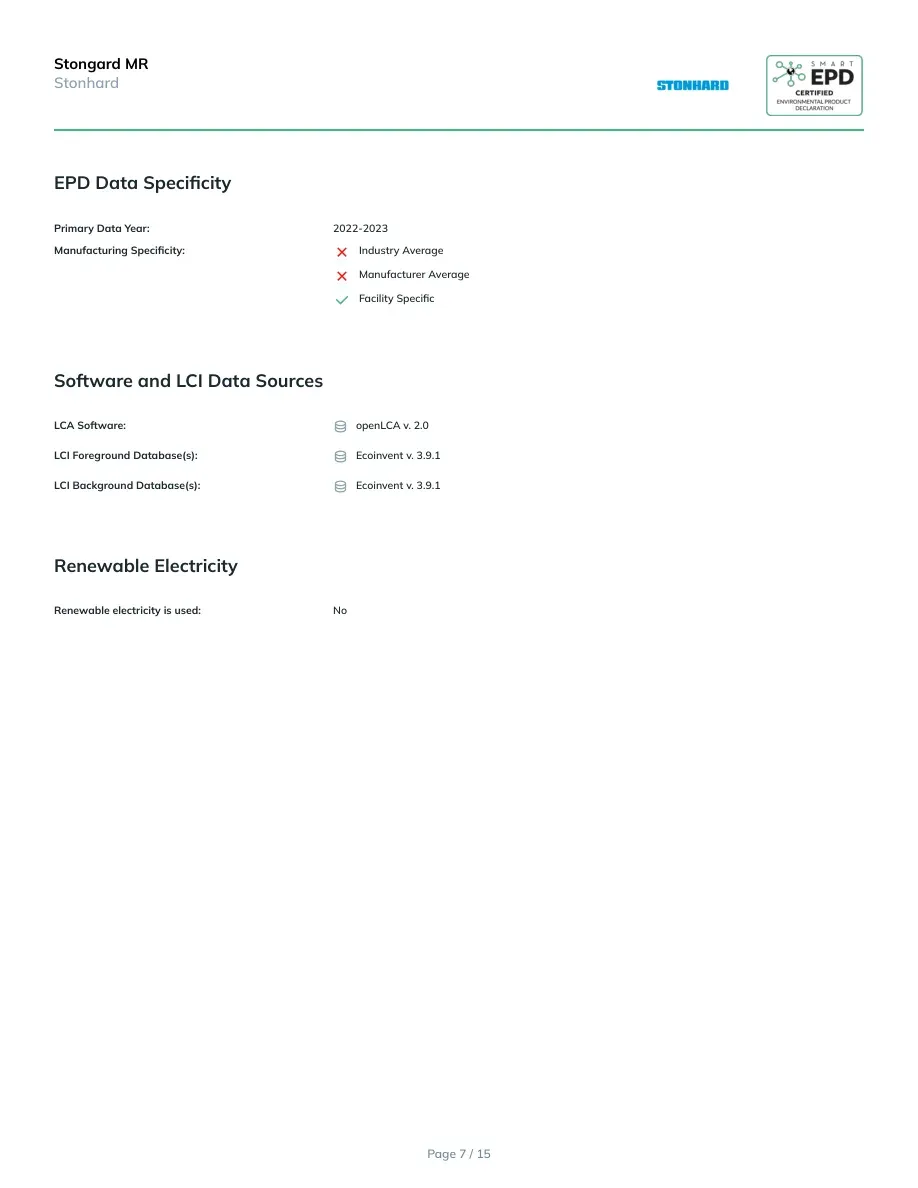
Stongard MRStonhardEPD Data SpecificityPrimary Data Year:2022-2023Manufacturing Specificity:Industry AverageManufacturer AverageFacility SpecificSoftware and LCI Data SourcesLCA Software:openLCA v. 2.0LCI Foreground Database(s):Ecoinvent v. 3.9.1LCI Background Database(s):Ecoinvent v. 3.9.1Renewable ElectricityRenewable electricity is used:NoPage 7 / 15
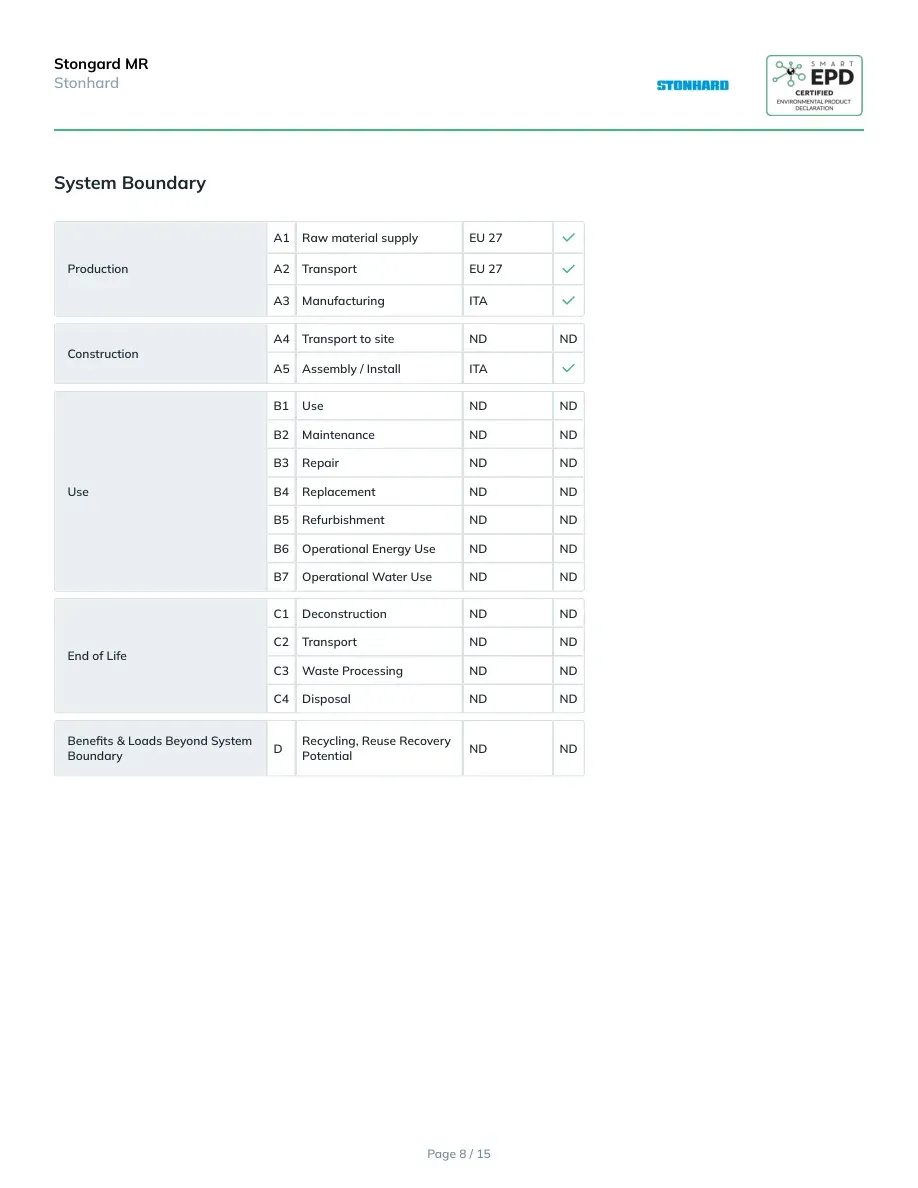
Stongard MRStonhardSystem BoundaryProductionA1Raw material supplyEU 27A2TransportEU 27A3ManufacturingITAConstructionA4Transport to siteNDNDA5Assembly / InstallITAUseB1UseNDNDB2MaintenanceNDNDB3RepairNDNDB4ReplacementNDNDB5RefurbishmentNDNDB6Operational Energy UseNDNDB7Operational Water UseNDNDEnd of LifeC1DeconstructionNDNDC2TransportNDNDC3Waste ProcessingNDNDC4DisposalNDNDBenefits & Loads Beyond System BoundaryDRecycling, Reuse Recovery PotentialNDNDPage 8 / 15
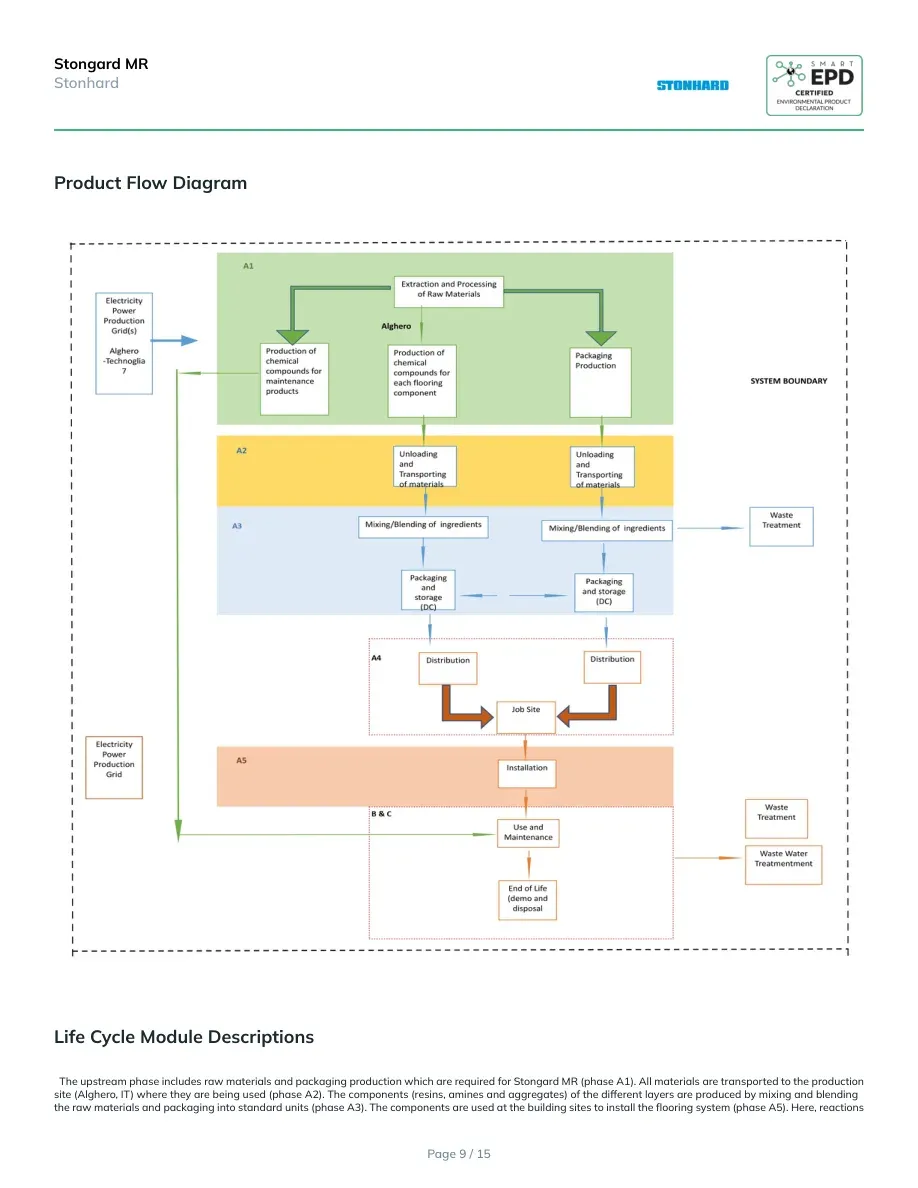
Stongard MRStonhardProduct Flow DiagramLife Cycle Module Descriptions The upstream phase includes raw materials and packaging production which are required for Stongard MR (phase A1). All materials are transported to the production site (Alghero, IT) where they are being used (phase A2). The components (resins, amines and aggregates) of the different layers are produced by mixing and blending the raw materials and packaging into standard units (phase A3). The components are used at the building sites to install the flooring system (phase A5). Here, reactions Page 9 / 15
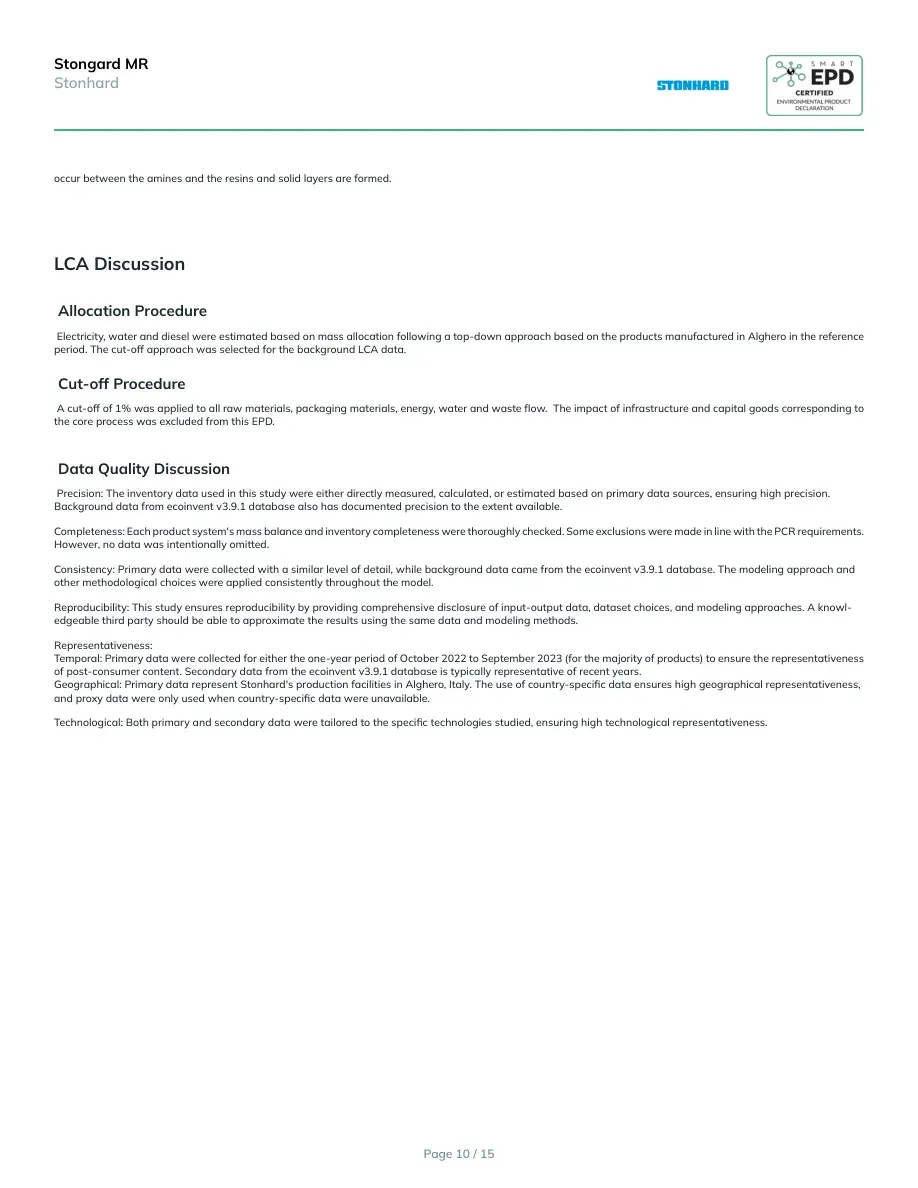
Stongard MRStonhardoccur between the amines and the resins and solid layers are formed. LCA Discussion Allocation Procedure Electricity, water and diesel were estimated based on mass allocation following a top-down approach based on the products manufactured in Alghero in the reference period. The cut-off approach was selected for the background LCA data. Cut-off Procedure A cut-off of 1% was applied to all raw materials, packaging materials, energy, water and waste flow. The impact of infrastructure and capital goods corresponding to the core process was excluded from this EPD. Data Quality Discussion Precision: The inventory data used in this study were either directly measured, calculated, or estimated based on primary data sources, ensuring high precision. Background data from ecoinvent v3.9.1 database also has documented precision to the extent available.Completeness: Each product system's mass balance and inventory completeness were thoroughly checked. Some exclusions were made in line with the PCR requirements. However, no data was intentionally omitted.Consistency: Primary data were collected with a similar level of detail, while background data came from the ecoinvent v3.9.1 database. The modeling approach and other methodological choices were applied consistently throughout the model.Reproducibility: This study ensures reproducibility by providing comprehensive disclosure of input-output data, dataset choices, and modeling approaches. A knowl-edgeable third party should be able to approximate the results using the same data and modeling methods.Representativeness:Temporal: Primary data were collected for either the one-year period of October 2022 to September 2023 (for the majority of products) to ensure the representativeness of post-consumer content. Secondary data from the ecoinvent v3.9.1 database is typically representative of recent years.Geographical: Primary data represent Stonhard's production facilities in Alghero, Italy. The use of country-specific data ensures high geographical representativeness, and proxy data were only used when country-specific data were unavailable.Technological: Both primary and secondary data were tailored to the specific technologies studied, ensuring high technological representativeness. Page 10 / 15
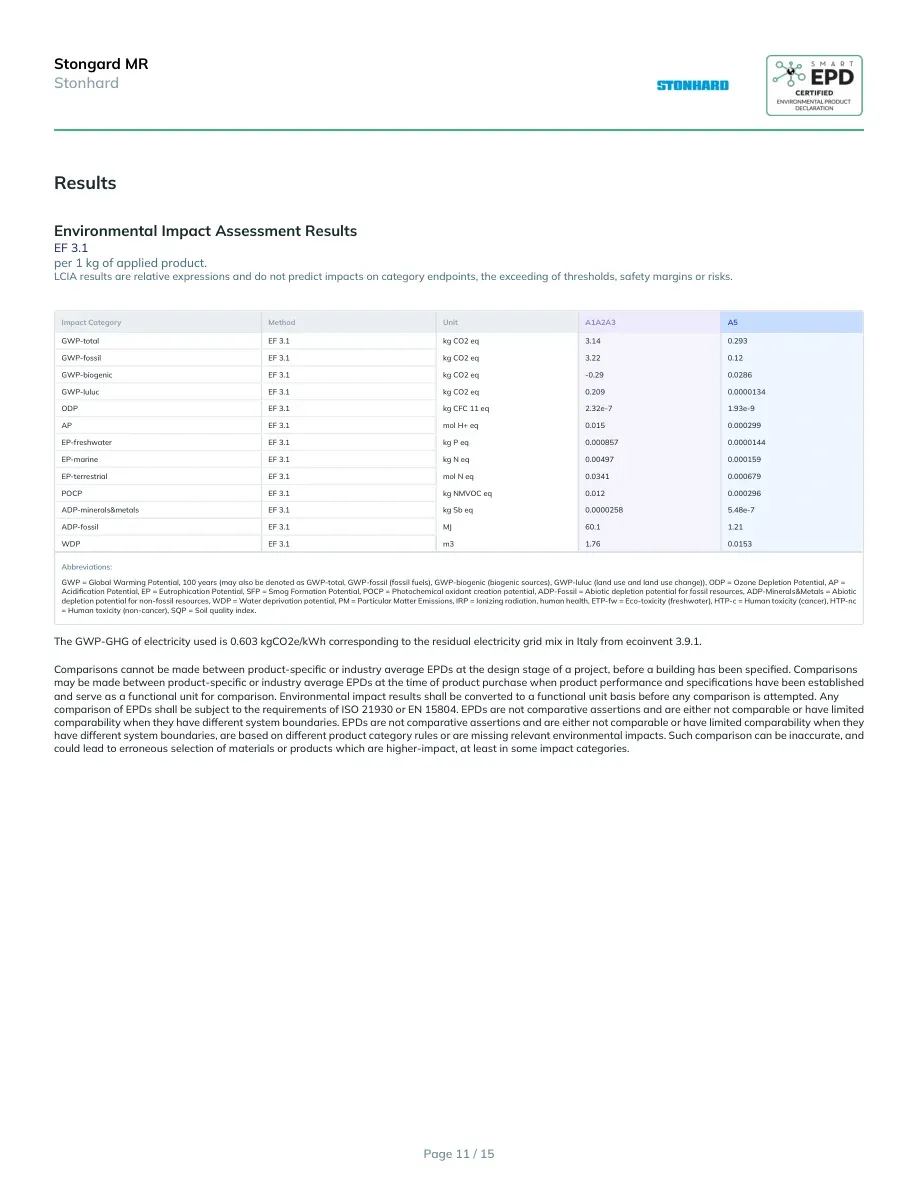
Stongard MRStonhardResultsEnvironmental Impact Assessment ResultsEF 3.1per 1 kg of applied product.LCIA results are relative expressions and do not predict impacts on category endpoints, the exceeding of thresholds, safety margins or risks.Impact CategoryMethodUnitA1A2A3A5GWP-totalEF 3.1kg CO2 eq3.140.293GWP-fossilEF 3.1kg CO2 eq3.220.12GWP-biogenicEF 3.1kg CO2 eq-0.290.0286GWP-lulucEF 3.1kg CO2 eq0.2090.0000134ODPEF 3.1kg CFC 11 eq2.32e-71.93e-9APEF 3.1mol H+ eq0.0150.000299EP-freshwaterEF 3.1kg P eq0.0008570.0000144EP-marineEF 3.1kg N eq0.004970.000159EP-terrestrialEF 3.1mol N eq0.03410.000679POCPEF 3.1kg NMVOC eq0.0120.000296ADP-minerals&metalsEF 3.1kg Sb eq0.00002585.48e-7ADP-fossilEF 3.1MJ60.11.21WDPEF 3.1m31.760.0153Abbreviations:GWP = Global Warming Potential, 100 years (may also be denoted as GWP-total, GWP-fossil (fossil fuels), GWP-biogenic (biogenic sources), GWP-luluc (land use and land use change)), ODP = Ozone Depletion Potential, AP = Acidification Potential, EP = Eutrophication Potential, SFP = Smog Formation Potential, POCP = Photochemical oxidant creation potential, ADP-Fossil = Abiotic depletion potential for fossil resources, ADP-Minerals&Metals = Abiotic depletion potential for non-fossil resources, WDP = Water deprivation potential, PM = Particular Matter Emissions, IRP = Ionizing radiation, human health, ETP-fw = Eco-toxicity (freshwater), HTP-c = Human toxicity (cancer), HTP-nc = Human toxicity (non-cancer), SQP = Soil quality index.The GWP-GHG of electricity used is 0.603 kgCO2e/kWh corresponding to the residual electricity grid mix in Italy from ecoinvent 3.9.1.Comparisons cannot be made between product-specific or industry average EPDs at the design stage of a project, before a building has been specified. Comparisons may be made between product-specific or industry average EPDs at the time of product purchase when product performance and specifications have been established and serve as a functional unit for comparison. Environmental impact results shall be converted to a functional unit basis before any comparison is attempted. Any comparison of EPDs shall be subject to the requirements of ISO 21930 or EN 15804. EPDs are not comparative assertions and are either not comparable or have limited comparability when they have different system boundaries. EPDs are not comparative assertions and are either not comparable or have limited comparability when they have different system boundaries, are based on different product category rules or are missing relevant environmental impacts. Such comparison can be inaccurate, and could lead to erroneous selection of materials or products which are higher-impact, at least in some impact categories.Page 11 / 15
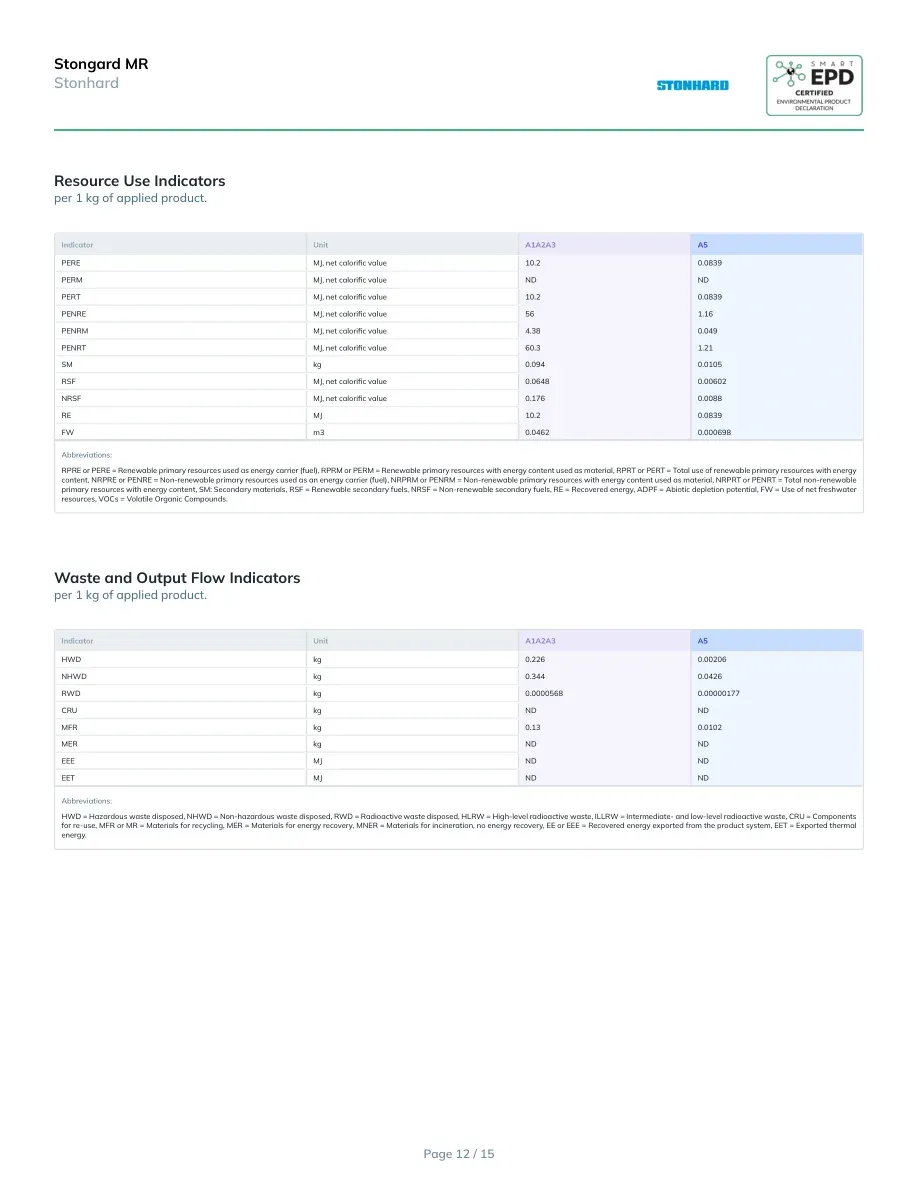
Stongard MRStonhardResource Use Indicatorsper 1 kg of applied product.IndicatorUnitA1A2A3A5PEREMJ, net calorific value10.20.0839PERMMJ, net calorific valueNDNDPERTMJ, net calorific value10.20.0839PENREMJ, net calorific value561.16PENRMMJ, net calorific value4.380.049PENRTMJ, net calorific value60.31.21SMkg0.0940.0105RSFMJ, net calorific value0.06480.00602NRSFMJ, net calorific value0.1760.0088REMJ10.20.0839FWm30.04620.000698Abbreviations:RPRE or PERE = Renewable primary resources used as energy carrier (fuel), RPRM or PERM = Renewable primary resources with energy content used as material, RPRT or PERT = Total use of renewable primary resources with energy content, NRPRE or PENRE = Non-renewable primary resources used as an energy carrier (fuel), NRPRM or PENRM = Non-renewable primary resources with energy content used as material, NRPRT or PENRT = Total non-renewable primary resources with energy content, SM: Secondary materials, RSF = Renewable secondary fuels, NRSF = Non-renewable secondary fuels, RE = Recovered energy, ADPF = Abiotic depletion potential, FW = Use of net freshwater resources, VOCs = Volatile Organic Compounds.Waste and Output Flow Indicatorsper 1 kg of applied product.IndicatorUnitA1A2A3A5HWDkg0.2260.00206NHWDkg0.3440.0426RWDkg0.00005680.00000177CRUkgNDNDMFRkg0.130.0102MERkgNDNDEEEMJNDNDEETMJNDNDAbbreviations:HWD = Hazardous waste disposed, NHWD = Non-hazardous waste disposed, RWD = Radioactive waste disposed, HLRW = High-level radioactive waste, ILLRW = Intermediate- and low-level radioactive waste, CRU = Components for re-use, MFR or MR = Materials for recycling, MER = Materials for energy recovery, MNER = Materials for incineration, no energy recovery, EE or EEE = Recovered energy exported from the product system, EET = Exported thermal energy.Page 12 / 15
Stongard MRStonhardCarbon Emissions and Removalsper 1 kg of applied product.IndicatorUnitA1A2A3A5No data foundAbbreviations:BCRP = Biogenic Carbon Removal from Product, BCEP = Biogenic Carbon Emission from Product, BCRK = Biogenic Carbon Removal from Packaging, BCEK = Biogenic Carbon Emission from Packaging, BCEW = Biogenic Carbon Emission from Combustion of Waste from Renewable Sources Used in Production Processes, CCE = Calcination Carbon Emissions, CCR = Carbonation Carbon Removals, CWNR = Carbon Emissions from Combustion of Waste from Non-Renewable Sources used in Production Processes, GWP-luc = Carbon Emissions from Land-use Change.Page 13 / 15
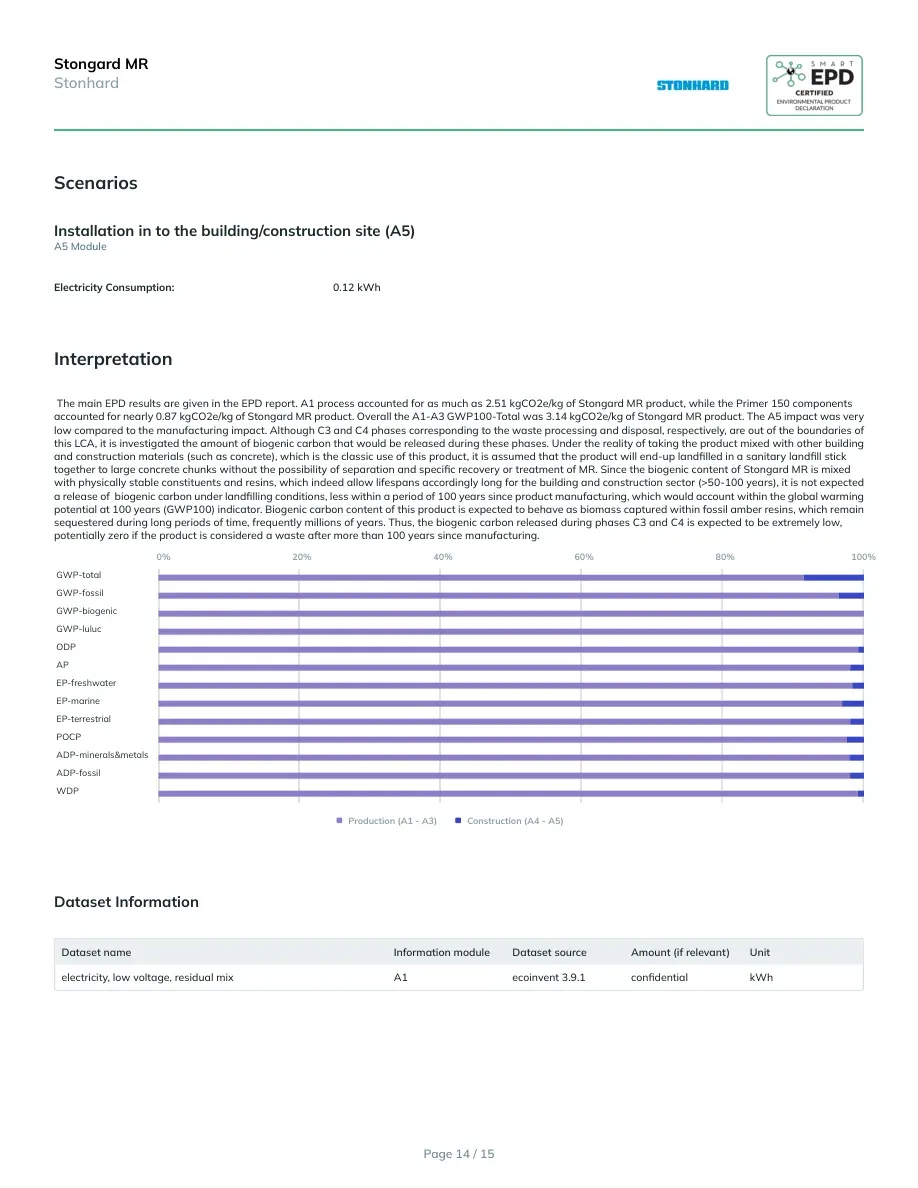
Stongard MRStonhardScenariosInstallation in to the building/construction site (A5)A5 ModuleElectricity Consumption:0.12 kWhInterpretation The main EPD results are given in the EPD report. A1 process accounted for as much as 2.51 kgCO2e/kg of Stongard MR product, while the Primer 150 components accounted for nearly 0.87 kgCO2e/kg of Stongard MR product. Overall the A1-A3 GWP100-Total was 3.14 kgCO2e/kg of Stongard MR product. The A5 impact was very low compared to the manufacturing impact. Although C3 and C4 phases corresponding to the waste processing and disposal, respectively, are out of the boundaries of this LCA, it is investigated the amount of biogenic carbon that would be released during these phases. Under the reality of taking the product mixed with other building and construction materials (such as concrete), which is the classic use of this product, it is assumed that the product will end-up landfilled in a sanitary landfill stick together to large concrete chunks without the possibility of separation and specific recovery or treatment of MR. Since the biogenic content of Stongard MR is mixed with physically stable constituents and resins, which indeed allow lifespans accordingly long for the building and construction sector (>50-100 years), it is not expected a release of biogenic carbon under landfilling conditions, less within a period of 100 years since product manufacturing, which would account within the global warming potential at 100 years (GWP100) indicator. Biogenic carbon content of this product is expected to behave as biomass captured within fossil amber resins, which remain sequestered during long periods of time, frequently millions of years. Thus, the biogenic carbon released during phases C3 and C4 is expected to be extremely low, potentially zero if the product is considered a waste after more than 100 years since manufacturing. 0%20%40%60%80%100% GWP-total GWP-fossil GWP-biogenic GWP-luluc ODP AP EP-freshwater EP-marine EP-terrestrial POCP ADP-minerals&metals ADP-fossil WDP Production (A1 - A3)Construction (A4 - A5)Dataset InformationDataset nameInformation moduleDataset sourceAmount (if relevant)Unitelectricity, low voltage, residual mixA1ecoinvent 3.9.1confidentialkWhPage 14 / 15
Stongard MRStonhardOther Environmental ImpactsImpact CategoryIndicatorUnitA1A2A3A5GWP-GHGNDkg CO2 eq3.430.264Abbreviations:GWP-IOBC/GWP-GHG = Climate change indicator with instantanious oxidation of biogenic carbon. The GWP-IOBC indicator has zero contribution to GWP from biogenic carbon temporary stored in products and packaging. The GWP-IOBC indicator, also called GWP-GHG, is identical to GWP-total except that the characterization factor (CF) for biogenic CO2 is set to zero.Further Information Mass per square meter References [1]�ISO 14040:2006, “Environmental management - Life cycle assessment - Principles and framework”.[2]�ISO 14044:2006, “Environmental management - Life cycle assessment - Requirements and guidelines”.[3]�EN15804:2019. Sustainability of Construction Products.[4]�NSF International, Product Category Rule for Environmental Product Declarations for Resinous Floor Coatings, December 2018.[6]�ISO 14025:2006, “Environmental labels and declarations - Type III environmental declarations - Principles and procedures”.[7]�ecoinvent v3.9.1, December 2022,https://ecoinvent.org/the-ecoinvent-database/data-releases/ecoinvent-3-9-1/[8]�Weidema B. P., C. Bauer, R. Hischier, et al. Overview and methodology. Data quality guideline for the ecoinvent database version 3. Ecoinvent Report 1(v3), St. Gallen: The ecoinvent Centre (2013). https://ecoinvent.org/wp-content/uploads/2021/09/dataqualityguideline_ecoinvent_3_20130506.pdf[9] �NPCR 009 Part B for Technical - Chemical products for building and construction industry[10] Construction Products Product Category Rule (PCR) 2019:14 v1.3.2 Page 15 / 15
